
To sell cosmetics online to the UK, especially as an international brand, you’ll need a plan. This guide covers the basics of everything you need to do to start selling your products in the UK.
Before we get into it, you need to know that Great Britain (England, Scotland and Wales) and Northern Ireland (NI) are governed by slightly different rules. Northern Ireland remains in the EU customs union for goods, so some EU rules still apply.
We recommend that you use this blog as a starting point, and that you read the official guidance before undertaking anything:
The information in this article is correct at the time of publication: September 2025
Jump to:
Getting your beauty products into a new market is a lot of work, as each country has different regulations. So why should you put in the effort to make your cosmetics ready for the UK market?
In 2024, the UK Beauty and Personal Care market hit 12 billion GBP (16 billion USD) in consumer spending. The market is expected to keep growing, some estimates reckoning 16% over the next ten years. Beauty products have driven most of that growth and are likely to outpace personal care this year.
The industry’s growth can in large part be attributed to social media. Particularly through short-form content found on platforms like TikTok and Instagram. They drive trends and encourage consumers to experiment with new products. They’re also home to impulse purchases, made even easier by in-app shops like TikTok Shop.
Two large, long-term shifts in UK consumers present opportunities for international beauty brands. First, there is increased awareness around environmental and health issues. You can see this play out in the growth in demand for sustainable, ethically sourced wellness products. Second, the UK’s population is ageing, which presents two major opportunities: a demand for more products like anti-ageing serums and a higher disposable income.
According to Boots (one of the UK’s major beauty retailers), demand for international brands in the UK is already substantial. Not only that, but it’s continuing to grow. Globally, we’re expanding our definition of beauty to include wellness and personal care. The UK is the perfect storm of high ecommerce penetration and shifting trends.
Before we get into the details of how to sell cosmetics in the UK, let’s look at what the law considers a cosmetic.
From Article 2 of the GB Cosmetics Regulation (EC) No. 1223/2009:
The definition of a cosmetic product comprises three parts: a function, field of application, and product composition. All parts of the definition must be satisfied. The Regulation specifies six functions in relation to external parts of the human body for products that may be cosmetic products, namely:
The field of application of cosmetics is to the external parts of the human body; that is one or more of the following sites:
A cosmetic product may be a substance or mixture of a number of substances, and it may come in one or more than one part to be combined by the user.
If your products meet the EU’s Cosmetics Regulation, you can sell them in Northern Ireland. Northern Ireland has complete access to the rest of the UK. That means qualifying Northern Ireland goods can be sold to the rest of the UK.
Great Britain and Northern Ireland have separate (but similar) rules for cosmetics. You don’t need a license to sell cosmetics in the UK, but you do have to follow the regulations.
The first thing you will need to sell beauty products in either case is a ‘Responsible Person’.
The responsible person is the one legally responsible for a product following all safety requirements and legal obligations. Every cosmetic product must have a responsible person to be sold in GB or NI.
The responsible person can either be an individual or a business. For GB, the responsible person must have an address in the UK. To sell in NI, they need to be based in either NI or the European Economic Area (EEA). PO Boxes and mail-forwarding addresses don’t count. They can be any of the following:
That means it doesn’t have to be you or your business if you don’t have an address in the UK or EEA.
The responsible person needs to know both the restrictions on what can go in cosmetics and what’s in the one you’re selling. They’re also responsible for a list of things we’ll cover next:
A Product Information File is all the documents showing how fit for human health a beauty product is. If anyone ever has an adverse reaction to your product, it might be asked for as part of their care. It must be in English, and the responsible person will need to keep the PIF up to date. They’ll need to keep it for 10 years after the last batch was made.
It has four main components:
Without a CPSR, you can’t sell your product to people in the UK. To get one, the responsible person has to send a qualified safety assessor details of your product. You should check with the safety assessor what they need from you, but it always includes:
The assessor will then produce their assessment, which will include their reasoning and their details.
The most common way to prove you’ve followed Good Manufacturing Practice when making your cosmetics is by following ISO 22716. It’s an internationally recognised standard, so you may already be compliant with it. You demonstrate that you’re meeting this standard by writing a GMP statement, which should also include batch records. Batch records are the batch numbers of the ingredients used to make a quantity of your product, the date that quantity was made and a unique number to identify them.
Before you can list your cosmetics for sale, the responsible person has to notify OPSS of the product. This is done by sending information about it, including the PIF, to the Submit Cosmetic Product Notifications (SCPN) portal. The portal will walk you through the process step-by-step.
Packaging and labels are a common place where brands get caught out. It can feel like your branding and the legal requirements are fighting each other for space. There’s a lot of information to get on the label and everything has to be easy to read.
The container for your product and its packaging has to have:
This isn’t a complete list and may change, so make sure to check official guidance.
If there’s too much to fit on the label, don't worry – you've got options. You can list the ingredients just on the packaging. If you’re making samples or anything in quantities smaller than 5g or 5ml, you don’t need to put the weight/volume on the label.
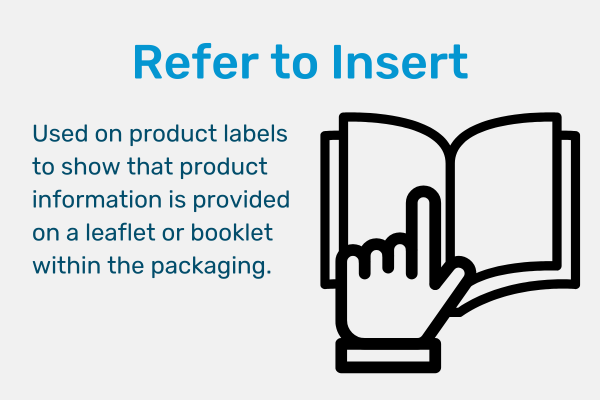
You can also include the information within the packaging, on a booklet or leaflet. If you’re going to do this, you have to include the “Refer to Insert” symbol on the label.
There’s no specific tax on cosmetics or beauty products in the UK. Non-UK businesses don’t have to establish companies in the UK to sell to UK consumers. So, unless you decide to do that, the only tax you’ll have to deal with is UK VAT (Value Added Tax).
There are two instances of VAT you’ll encounter:
If you need to register, and when depends on two factors:
VAT is a consumption tax paid by the end consumer of the product (your customer). It’s a percentage added to the gross cost of your product. The UK has three VAT percentages (rates): 20%, 5% and 0%. The rates apply to different product categories. As the seller, your responsibility is to collect the tax and pass it to the UK’s tax authority (HMRC).
To do this, you will need to get registered for VAT. Then, you:

There’s no registration threshold for non-UK businesses, meaning you have to be registered before your first applicable sale.
The UK has a £135 intrinsic value threshold that works a little like IOSS in the EU and previously, how the de minimis exemption did in the USA. The intrinsic value of a shipment is the price your customer paid for it, not including shipping or taxes (unless they’re included in the price). It affects whether you’re required to register for VAT in the UK.
If you’re selling through a channel you own (like your Shopify store), you can choose to make your customer the importer of record if the intrinsic value of their order is less than £135. Making them the importer of record makes them responsible for paying the VAT. We don’t recommend this as a strategy, as it increases cart abandonment and results in a worse shipping experience. If you’re shipping to Northern Ireland, you can opt to register for IOSS instead of UK VAT to report the VAT on shipments under the threshold.
Marketplaces are required to handle the VAT on sales below the threshold, meaning the same sale made on Amazon also wouldn’t require you to register for VAT.
You have to register for VAT when you plan to make sales with an intrinsic value of over £135.
Selling wholesale is a great way for smaller brands to generate revenue. However, doing so comes with its own set of VAT obligations. You have to register for VAT to sell goods to a UK business.
When you ship your products to the UK, they’ll pass through customs. There, they’ll be evaluated to work out their customs value. The customs value is the basis on which the import VAT and any duties are calculated. The main way the customs value is calculated is the transaction value. This is the price the buyer paid the seller.
As with VAT on sales, import VAT is a percentage. It’s applied to the customs value of your shipment. For example, £200 worth of skin care with the standard 20% VAT rate applied means you’ll be paying £40 in import VAT. Import duties work the same way, but the percentage varies depending on the commodity code of your product.
One of the benefits of registering for VAT in the UK is that you can reclaim the import VAT you’ve paid. When you file your VAT return, you’re telling HMRC how much VAT you’ve collected and how much you’ve paid. When you’ve collected more than you’ve paid, the amount you’ve paid offsets the amount you’ve collected. You only pay HMRC the difference. If you’ve paid more than you’ve collected, you’re refunded the difference!
The UK has a Postponed VAT Accounting (PVA) system. PVA allows you to pay all your import VAT at once via your VAT return rather than every time you import something. This system can help you manage your cash flow, which is very helpful if you have a lot of UK orders.
When it comes to actually sending your products to your customers, there are a few requirements and a handful of things to consider. To import things into the UK, you’ll need an Economic Operator Registration and Identification (EORI) number.
EORI numbers help the UK and EU track goods as they cross international borders. They identify who’s importing something and help speed up customs procedures. Because of Brexit, you’ll need two EORI numbers to ship orders everywhere in the EU. You’ll need a GB number for orders going to England, Scotland and Wales, and an XI number for goods headed for Northern Ireland.
Outside of the labels, there are no regulations or requirements for cosmetic packaging in the UK. There’s still a lot to consider when you’re designing your packaging, though. You’re likely to need packaging that is:
Products getting damaged in shipping is a quick way to create unhappy customers and shrink your profit margin.
Storing your products in the UK means faster shipping times for your customers, but how do you choose where to do it? Ideally, you need to find a warehouse or 3PL provider who have experience with products that have specific storage and handling requirements. For products with a limited shelf life, having a trusted partner is particularly important. You’ll need someone who can help you manage your inventory and dispose of any items past their sell-by date.
Now you’ve got all the admin and logistics out of the way, how do you convince UK consumers to buy your products?
There are a lot of ways to get your brand in front of new customers, and much like everywhere else, social media plays a huge role. You have a lot of options in that space too – from sponsoring micro influencers to posting behind-the-scenes video. It’s particularly useful for building awareness before you launch your products in the UK. Getting buzz going first means you’ll see returns on your investment quicker – especially if you’re launching with goods stored in the UK.
Writing marketing copy for cosmetics and beauty products to sell in the UK can be quite involved. In general, there are two major rules:
The Advertising Standards Agency (ASA) is the UK’s independent regulator. They have a list of product categories and guidance for advertising them, such as SPF or supplement claims.
Notably, whether claiming that your product is “free from” something is allowed is a little complicated. You should avoid saying your product is free from ingredients that wouldn’t normally be used in that kind of cosmetic. It also can’t be used when you’re not using an ingredient that’s legal for use in products like yours. Better to focus on what’s in your product rather than what’s not!


