To sell cosmetics online to the EU’s 440 million consumers, you’ll need to meet the market’s regulatory requirements. You don’t need a licence to sell cosmetics in the EU, but your product needs to be up to standard. Plus, you’ll need to think about labelling, tax and marketing rules.
This guide covers EU-wide rules. Each member state may have its own additional rules and regulations. We recommend that you use this blog as a starting point, and that you read the official guidance before getting started:
EU Commission Cosmetics Guidance
This guide is accurate at the time of publication: October 2025
Jump to:
Europe is a particularly lucrative market for beauty brands.
Europeans love beauty and fashion. Germany, France and Italy – just three of twenty-seven EU countries - purchased €44.1 billion in cosmetics in 2024. Plus, that figure is expected to grow 3.28% a year.
Consumers in the EU spend a lot on cosmetics from international brands. Seven of the top fifteen importers of beauty products are EU countries. Germans alone imported $3.2 billion USD worth of beauty products in 2024, up 5% on the previous year.
Ecommerce is well established in the EU – 77% of EU citizens used the internet to buy something in 2024. As more nations improve their digital infrastructure, that percentage increases. In some EU countries, the rate is much higher than average. 90% or more of people in Denmark, Ireland, the Netherlands and Sweden shopped online in 2024.
EU and UK cosmetics regulations are different but are based on the same legislation: Regulation 1223/2009. Since Brexit rules have diverged - some ingredients are banned in the UK and not in the EU, for example. However, meeting EU compliance rules is good practice for doing the same in the UK, making it easier to add one of Europe’s largest economies to your available markets.
The foundation of the EU’s cosmetics regulations is a piece of legislation called Regulation (EC) N° 1223/2009. This legislation and its subsequent amendments aim to keep EU citizens safe. It requires that:
The EU defines cosmetics as:
“any substance or mixture intended to be placed in contact with the external parts of the human body (epidermis, hair system, nails, lips and external genital organs) or with the teeth and the mucous membranes of the oral cavity with a view exclusively or mainly to cleaning them, perfuming them, changing their appearance, protecting them, keeping them in good condition or correcting body odours;”
EU law applies across all twenty-seven member states, but they can add their own rules on top. That means your specific product might not be considered a cosmetic in every EU country. It’s best to check local legislation before you start selling.
Once you’ve determined your product is considered a cosmetic in the EU, you’ll need to do three things:
Before you can sell your goods in the EU, you need to appoint a “Responsible Person”. This needs to be either an actual person or a company, but they have to be based in the EU. Each of your products needs a responsible person, but it can be the same person for all of them.
The EU responsible person is legally responsible for your products being compliant with regulations and therefore, safe for use. Their job is to:
Should your product cause anyone any harm, they must also notify the relevant authorities in the country where they’re based.
For every cosmetic product you want to sell in the EU, you’ll need a Product Information File. Once it’s been put together, the responsible person is in charge of keeping it up to date. They have to keep it accessible to the authorities for 10 years after the last batch was put on sale.
Your PIF needs to have:
A Cosmetic Product Safety Report is a two-part report: your cosmetic product safety information and a cosmetic product safety assessment. The safety information includes things like:
This isn’t a comprehensive list. When you go to get your safety assessment, the assessor will tell you what information they need.
To get a cosmetic product safety assessment, you’ll send your safety information to a qualified assessor. Based on that information, the assessor will decide whether your product is safe and compliant with regulations. You’ll get a written conclusion with the reasoning, as well as their credentials for you to include in the PIF.
Once you have your PIF completed, the responsible person has to notify the Cosmetics Products Notification Portal (CPNP). They do this by uploading specific parts of the PIF to the CPNP. You’ll get a notification number to show that it’s been done.
You have to do the notification before you put your product on the market. Having a notification number, however, doesn’t mean that your product is “approved”. It's still up to you to ensure you meet all the other requirements. By notifying CPNP, you’re essentially helping to build the database of cosmetic products for sale in the EU.
Labelling rules in the EU are relatively straightforward, but getting them wrong can be expensive. You don’t want to have to reprint hundreds of bottles or boxes!
This isn’t a complete list and may change, so make sure to check official guidance.
If there’s too much to fit on the label, don't worry – you've got options. You can list the ingredients just on the outer packaging. If you’re making samples or anything in quantities smaller than 5g or 5ml, you don’t need to put the weight/volume on the label.
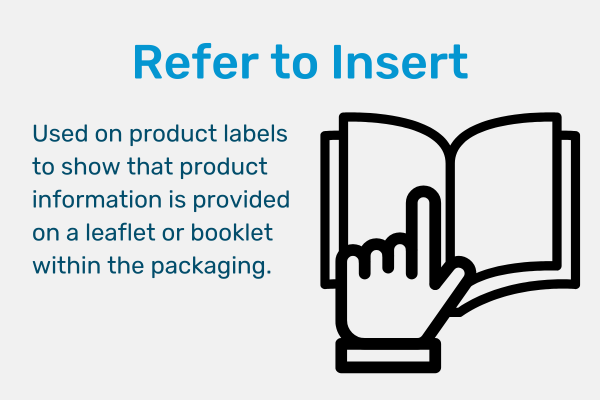
You can also include the information within the packaging, on a booklet, leaflet or tag. If you’re going to do this, you have to include the “Refer to Insert” symbol on the label.
The General Product Safety Regulation (GPSR) came into effect in December 2024. Broadly speaking, GPSR aims to make sure that goods sold online to consumers in the EU are safe. It applies to all products sold in the EU, including cosmetics.
Fulfilling the requirements of EU cosmetics regulations gets you most of the way towards being GPSR compliant. The additional requirements use work you have already done – you need to list certain information online, on the product page:
If you’re selling your products through a distributor, provide them with this information so they can add it to their website.
There aren’t any EU-wide taxes specific to cosmetics or beauty products. Watch out though - individual EU countries may have them or have taxes on specific kinds of packaging.
What you will always encounter, however, is Value Added Tax (VAT). The implementation of VAT is a requirement for EU membership. So, you’ll have to deal with it no matter where in the EU your customers are.
There are two instances of VAT you’ll encounter:
If you need to register, when, and what for, depends on specific factors:
VAT is a consumption tax paid by the end consumer of the product (your customer). It’s a percentage added to the gross cost of your product. Every EU country decides what percentage VAT rate to apply. Most have more than one rate: standard, reduced and zero. Standard rates apply to most goods and services, whilst reduced and zero rates only apply to specific categories. Your product may be standard-rated in one country and reduced in another.
As the seller, it’s your responsibility to manage the VAT. You can opt to collect it from your customers and pass it to the tax authorities. To do that, you’ll need to get registered for VAT or one of the EU’s VAT schemes. Then, you:

For non-EU businesses, VAT is an immediate concern. What you have to do depends on where the sale was made: on an online marketplace or your own website.
Online marketplaces like Amazon have to handle the VAT for their sellers up to a certain point. The responsibility for the VAT shifts to you when an order is worth more than €150. At that point, you have two options:
Shipping DAP makes your customer the “importer of record”. Making them the importer of record makes them responsible for paying the VAT. We don’t recommend this as a strategy, as it increases cart abandonment and makes for a worse shipping experience.
When you ship DDP, you’re telling EU customs that you’re paying the VAT and customs duties. You can do this without registering for VAT, but that means you’re paying all the VAT out of pocket.
When it comes to orders placed on your website (like your Shopify or WooCommerce store), you’re always responsible for handling the VAT. You can also opt to ship DAP or DDP. To ship DDP to a customer in the EU, however, you’ll need one of two things:
Registering for VAT in an EU country will cover all sales to that country, but just that country. IOSS (Import One Stop Shop) is an EU VAT scheme. It covers the sale of goods that are outside the EU at the point of sale. IOSS only covers orders with an intrinsic value of up to €150.

You can make delivery times shorter if your products are already in the EU when your customer buys them. However, storing goods for sale in an EU country means you have to register for VAT there. You’re likely to run into this situation if you’re using Amazon FBA Pan-EU or FBM.
Once your goods are in the EU, you can register for One Stop Shop (OSS). Previously, you would have had to register for VAT in every EU country where you had a customer. Now, you can sell goods stored in one EU country to customers in other member states and report the sales on OSS.
In many cases, non-EU businesses don’t need to worry about VAT on B2B sales. If you’re based outside the EU and your customer is VAT registered, the reverse charge mechanism often applies. You include “reverse charge mechanism” on the invoice, and they account for it on their VAT return.
When you’re the importer of record, you’ll have to pay import VAT when your shipment reaches EU customs. There are some exceptions:
Import VAT is a percentage applied to the customs value (or CIF Value) of your shipment. For example, €200 of skin care with a 19% VAT rate applied means you’ll be paying €38 of import VAT. Import duties work the same way, but the percentage varies depending on the commodity code of your product.
One of the benefits of being registered for VAT in the EU is that you can reclaim import VAT that you’ve paid. When you file a VAT return, you’re telling the tax authorities how much VAT you’ve collected and how much you’ve paid. When you’ve collected more than you’ve paid, the amount you’ve paid offsets the amount you’ve collected. You only pay the tax authorities the difference. If you’ve paid more than you’ve collected, you’re refunded the difference!
It’s important to note that you can’t reclaim import VAT via an IOSS return.
Some EU countries have Postponed VAT Accounting systems (PVA) - in France, it’s how all import VAT is handled. PVA allows you to pay all your import VAT at once via your VAT return rather than every time you import something. This system can help you manage your cash flow, which is very helpful if you have a lot of orders from one country.
When it comes to actually sending your products to your customers, there are a few requirements. To import things into the EU, you’ll need an Economic Operator Registration and Identification (EORI) number.
EORI numbers are used by the EU and the UK to track goods as they cross international borders. They identify who’s importing something and help speed up customs procedures. You register for an EORI number in a single EU country, but you can use it to import goods all over the EU.


