This guide explains:
Shopify today is one of the most popular ecommerce platforms. Inspired by poor experiences shopping for snowboarding gear online, three Canadians created Shopify in 2004. The platform has gone from strength to strength, doubling its number of online merchants each year. Shopify in 2025 has over 5 million active stores currently operating.
Getting your Shopify store online is exciting, so it's easy to overlook the complicated (but necessary) parts of international ecommerce. For EU and non-EU sellers who use Shopify to reach EU customers, it’s crucial to understand VAT and its impact on your business.
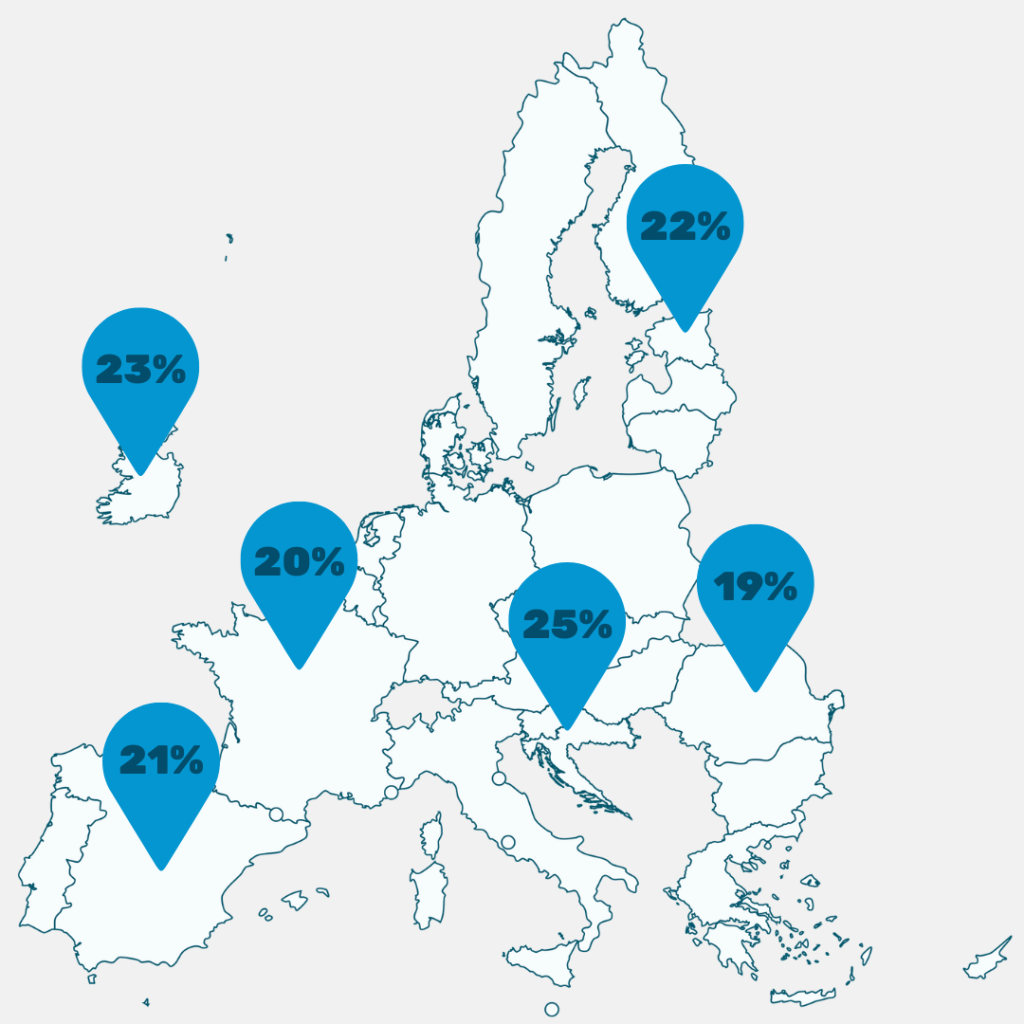
Selling on your own website (through Shopify) makes you responsible for handling the VAT. Since the July 2021 EU VAT reforms, general taxation rules require you to charge your customers their local VAT rate. That means you need to charge your EU customers VAT on their purchases based on their location and pass that money to their local tax authority.
For example, you sell a backpack to a customer in Germany. You need to include the VAT rate that applies to backpacks in Germany in the price. Then, you file a VAT return in Germany and pass that money to the German tax authority.
Every country in the EU sets its VAT rates. Every country has a standard rate, which applies to most goods and services (ranging between 17 – 27% across the EU). Most also have one or more reduced rates, which apply to specific things. Some countries have a zero rate. Customers don’t pay VAT on zero-rated sales, but sellers can still reclaim the VAT they’ve paid on related costs. Lastly, some things are VAT exempt, which means VAT doesn’t apply at all.
Staying updated and aware of the VAT rates you require is important to keep your margins protected.
Goods and services are the two broad product categories used in EU VAT law. Goods are:
Everything else is a service. That means products like downloadable PDFs are counted as a service in EU VAT law. This is an important distinction, as what you’re selling changes how the rules are applied.
Selling on Shopify from the EU is relatively straightforward.
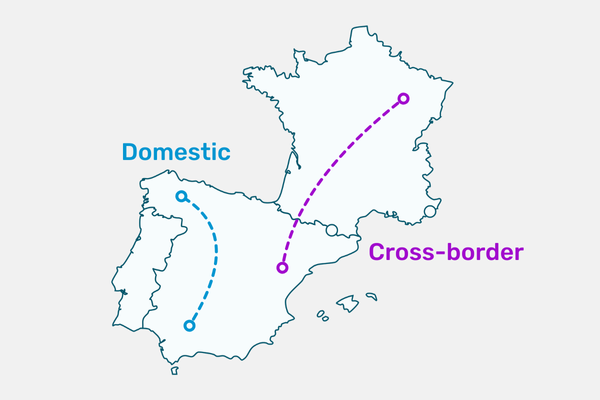
Domestic sales are sales made in the country where you’re established. For example, you sell fountain pens from your business in Seville via Shopify to a customer in Lugo. All of that happens in Spain, so that’s a domestic transaction. Domestic sales are reported on your domestic VAT registration.
If the same business sells the same fountain pen to a customer in France, that’s a cross-border transaction. When your customers or stock are in another EU country, your VAT obligations change.
For when you’re selling goods or services from your own country to a customer in another EU State. You register for it with your local tax authority and file the return with them. They pass the VAT you collect to the tax authorities of your customers on your behalf.
If you decide to hold stock in another EU country, you’ll need to register for VAT there. Storing inventory in another EU country for onward sale creates a taxable supply, which triggers this obligation. The most common reason we see people doing this is that they’re using a 3PL for faster, more cost-efficient delivery.
You’ll also need to register for VAT in other EU countries if your goods are:
Alternatively, you can have your customer be the importer of record. That means they’re responsible for the VAT and any customs fees due on the shipment.
When your goods are outside the EU when they’re brought, you can register for IOSS. IOSS lets you collect and remit VAT all over the EU on a single registration. It’s way less paperwork than registering for VAT in every EU country where you have a customer.
You can only use IOSS to report sales that meet all these criteria:
Depending on your taxable turnover, you might not need to register anywhere but where you’re based. Micro businesses are EU-based and have a taxable turnover of less than EUR 10,000 per calendar year. That amount doesn’t include turnover in your home country, just your intercommunity sales.
Until you pass the micro-business threshold, you might not need to register for VAT in another EU country. Plus, you’ll only need to charge your customers your local VAT rate.
As this micro-business exemption is relatively low, most EU-based Shopify sellers will quickly surpass this threshold. At that point, you’ll need to apply for one of the VAT registrations mentioned above.
For businesses based outside the EU, selling goods to EU customers will require you to register for VAT in some way. Unlike businesses based in the EU, there’s no threshold to pass. Many countries require registration before your first sale.
Previously, goods imported with a value under EUR 22 were exempt from VAT, but that exemption was abolished.
Certain kinds of services require you to charge your clients VAT. The most common category is “Electronically Supplied Services”. In that category, you’ll find digital media, digital books, and online courses. For example, you sell your Dungeons & Dragons homebrew subclass as PDFs. You might need to charge VAT on that PDF.
The wording in the law is very specific. If you’re selling services online to the EU, we recommend you talk to someone about your business so you can get equally specific advice.
The EU scheme for non-EU businesses selling services to EU customers is Non-Union OSS. Like IOSS and OSS, it allows you to manage your VAT obligation in multiple EU countries on one VAT return.
When you want to sell inventory you hold in the country where you’re based, you have two options:
Which you do will depend on what your orders look like.
As mentioned above, IOSS is a scheme that allows you to report low-value sales to customers all across the EU. The main benefit is that it’s more cost-efficient and less admin time than registering for VAT in multiple countries. However, it only covers B2C sales of goods sent in consignments worth EUR 150 or less. You also can’t reclaim import VAT via an IOSS return.
You’ll need to register for VAT in individual countries for orders over the EUR 150 IOSS limit. Whilst it’s more work, individual VAT registrations give you more freedom. For starters, you don’t have to implement a basket limit on your customers in those countries. An individual registration will also cover you, should you decide to store some inventory in that country.
Storing goods in the EU that will be sold triggers VAT obligations in the countries where your inventory is housed. So, if you store goods in the Netherlands, you’ll need to register for VAT in the Netherlands. Once you’re registered, you can reclaim any VAT you’ve paid in that country, including import VAT.
If you sell those goods B2C across the border to another EU country, you trigger another VAT obligation. Now you have two options – either register for VAT again in the destination country or register for OSS.

Registering for VAT isn’t the only option for selling goods to the EU. You can choose to make your customer the ‘importer of record’ (IOR). The importer of record is who is responsible for the import VAT and any fees or duties levied by customs.
Usually, the business is the IOR. We recommend you do this wherever you can, because being the IOR is a worse experience for your customer. Generally, EU consumers are not expecting to pay VAT or duties at the border. The surprise at the extra cost is likely to cost you a repeat customer.
Being able to communicate to your customers that you’re the IOR will also decrease your cart abandonment. Sometimes, this is as simple as having a separate Shopify storefront for the countries where you’re VAT registered.
Once you’re registered for VAT or a VAT scheme, you can set up your Shopify to charge your customers their local VAT rate. There are separate settings for individual registrations, IOSS and OSS.
If you’re struggling, please check out Shopify Help Centre for support.
This process will allow you to collect VAT in the country(s) where you have a VAT registration:
Find out how to set up your store for IOSS, OSS and B2B sales in our complete Shopify VAT Guide.

You don’t need a VAT number to start selling on Shopify. However, if you decide to sell across an international border, you might need to get a VAT number.
You can sell on Shopify without a VAT number, as long as you either:
Shopify will charge your customers VAT if you configure your shop’s settings to enable it to do so.
To get a VAT number for Shopify, you will need to register for VAT.
Shopify will charge you VAT on your fees depending on where your store is based.


